
AI

Landfort 64, Lelystad 8219AL

4025 River Mill Way
Mississauga, ON L4W 4C1, Canada

4A, Maple High Street
Hoshangabad Road, Bhopal, MP

Office 47, Oud Mehta Tower, 9th Floor, Next
to Wafi City, Umm Hurair Second, Dubai, UAE

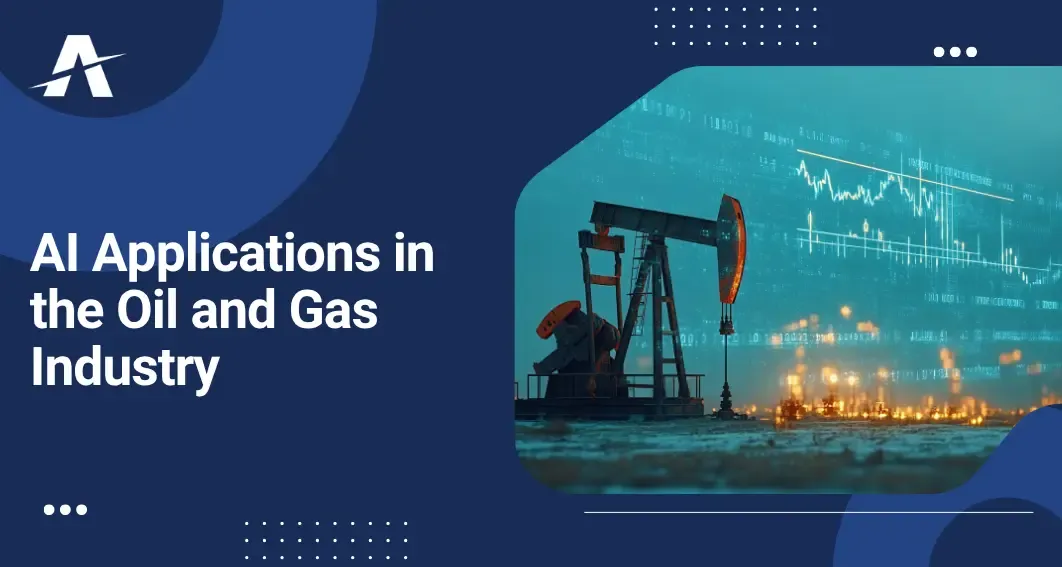
The oil and gas industry is going through a big change. One of the main drivers of this change is artificial intelligence (AI). Companies are now using AI in oil and gas to work smarter, faster, and safer.
AI helps in many areas from finding new oil and gas reserves (called oil exploration) to keeping machines running smoothly (predictive maintenance). It helps reduce mistakes, cut costs, and make better decisions by analyzing huge amounts of data that humans can’t process quickly on their own.
In short, AI is becoming a key tool to improve how the oil and gas industry operates from deep underground to high above the surface.
The adoption of AI in oil and gas is not just a trend—it's a necessity. The industry faces challenges such as volatile markets, aging infrastructure, and increasing demands for sustainability. Energy sector AI offers solutions by:
Processing vast amounts of seismic and sensor data
Enabling real-time monitoring and automation
Reducing exploration and production costs
Minimizing environmental impact
AI for Oil Exploration
AI for oil exploration revolutionizes the way companies identify potential drilling sites. Machine learning algorithms analyze seismic data to pinpoint viable reserves more accurately and efficiently.
Accelerated analysis of subsurface data
Reduced exploration risks
Enhanced reservoir predictions
Drilling Optimization
AI systems monitor drilling parameters in real-time, allowing for immediate adjustments that improve efficiency and prevent costly errors.
Predicting equipment failures
Automating drilling parameter adjustments
Reducing non-productive time (NPT)
Predictive Maintenance
With assets often located in remote areas, energy sector AI predicts equipment failures before they occur, ensuring continuous operations.
Extended equipment lifespan
Decreased unplanned downtime
Lower maintenance costs
Production Optimization
AI models analyze sensor data to optimize flow rates and identify inefficiencies in production processes.
Real-time production tracking
Leak detection
Gas-lift optimization
Safety and Environmental Monitoring
AI enhances safety protocols and environmental monitoring through computer vision and anomaly detection.
Monitoring compliance with safety standards
Detecting gas leaks promptly
Managing emissions in real-time
We understand that each organization has distinct needs. Our team develops bespoke AI applications that align with specific business objectives, ensuring optimal results.
Our services leverage cutting-edge technologies, including:
Machine Learning (ML): For predictive analytics and trend analysis
Natural Language Processing (NLP): To interpret and process vast textual data
Computer Vision: For real-time monitoring and anomaly detection
MLOps: Ensuring seamless deployment and maintenance of ML models
The integration of AI in oil and gas is set to deepen, with advancements such as:
Autonomous drilling rigs
AI-powered robotics for pipeline inspections
Real-time market forecasting
Companies that embrace energy sector AI now are positioning themselves for a competitive advantage in the future.
The incorporation of AI in oil and gas is transforming the industry, offering solutions that enhance efficiency, safety, and profitability. AskGalore stands at the forefront of this transformation, providing tailored AI solutions that address the unique challenges of the energy sector.
AI in oil and gas refers to the use of artificial intelligence technologies—like machine learning, computer vision, and predictive analytics—to optimize operations such as exploration, drilling, maintenance, and safety monitoring.
AI for oil exploration speeds up the analysis of seismic data, helping geologists find oil and gas reserves more accurately. It reduces exploration risks and saves time by identifying potential drilling sites faster.
Some key benefits include:
Faster decision-making
Reduced equipment downtime
Improved safety and environmental monitoring
Lower operational costs
Enhanced data accuracy
Predictive maintenance uses AI to analyze data from equipment and predict when failures might happen. This allows oil and gas companies to fix problems before they cause costly breakdowns or safety issues.
Yes. With cloud-based tools and modular platforms, AI in the energy sector is becoming more affordable. Companies like AskGalore offer scalable solutions that can fit different budgets and needs.
AskGalore builds custom AI solutions for the oil and gas industry, including tools for exploration, real-time monitoring, data analysis, and predictive maintenance. The focus is on making operations smarter, safer, and more efficient.
Not exactly. AI supports human workers by automating repetitive tasks and providing better insights. It helps teams make faster, data-driven decisions—freeing up people to focus on complex problem-solving and safety.